



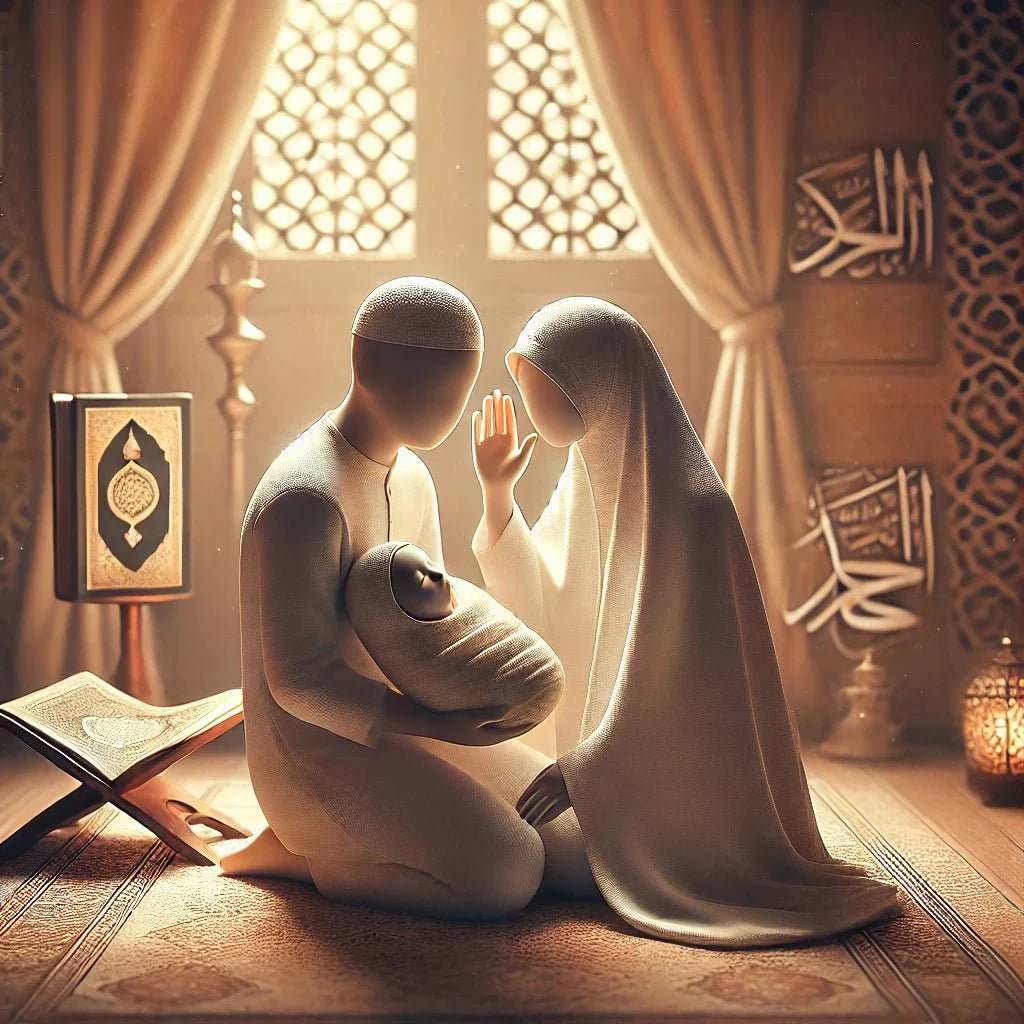
Invocations and Practices at the Birth of a Baby
The birth of a child is a huge blessing in Islam. It is a time of gratitude to Allah, where the family is encouraged to follow certain practices and recite specific invocations. These rituals are intended to bless the newborn and remind the parents of their spiritual and educational responsibilities. Here is a complete guide to the Islamic invocations and rituals related to this event.
1. Gratitude to Allah
The birth of a child is an opportunity to thank Allah for this precious gift. A dua of gratitude can be recited:
“Alhamdoulillah alladhi bi ni’matihi tatimmou as-salihat.”
Translation: "Praise be to Allah, through whom good things are accomplished."
This recognition towards Allah strengthens faith and places this event in a spiritual perspective.
2. The Call to Prayer in the Ear of the Newborn
According to a Sunnah practice attributed to the Prophet Muhammad (peace and blessings be upon him), it is recommended to recite the adhan (call to prayer) in the baby's right ear, as soon as possible after birth.
This action symbolizes the importance of the call to Allah in the child's life. It also places the divine word as the first words heard by the child.
3. Tahnik (First Food)
Tahnik is a prophetic tradition of rubbing a bit of chewed date or sweet honey on the palate of the newborn. This ritual, mentioned in several authentic hadiths, has spiritual and symbolic meanings, marking a smooth start to life.
4. Invocations for the Newborn
It is sunnah to make dua to seek Allah's blessing and protection for the child. Here is a reported prophetic supplication:
“Umma barik fihi wa aj’alhou min as-salihin.”
Translation: “O Allah, bless this child and make him among the righteous.”
Another famous invocation is:
“Ou'idhouk bikalimati-Llahi-t-tammati min kulli chaytani wa hammatin wa min kulli 'aynin lammah.”
Translation: “I place you under the protection of the perfect words of Allah against every devil, every evil eye and every evil.”
5. Aqiqah: A Highly Recommended Sunnah
Aqiqah is the sacrifice of an animal as a token of thanks to Allah for the birth of a child. It is recommended to slaughter:
- A sheep for a girl.
- Two sheep for one boy.
The meat is then shared among family, friends and the needy. This ritual symbolizes gratitude and the act of charity through a sunnah practice.
6. Give a Blessed Name
Choosing a first name is a crucial moment. In Islam, it is recommended to give the child a first name with a noble meaning. Among the best names, we find:
- For boys : Muhammad, Ahmed, Abdullah, Adam, Ibrahim...
- For girls : Fatima, Aïcha, Maryam, Hawa,...
A hadith from the Prophet (peace and blessings be upon him) recalls:
“The best of names is Abdullah or Abdurrahman.” (Sahih Muslim).
7. Circumcision
For boys, circumcision is a highly recommended sunnah practice in Islam. It can be performed within days or weeks of birth, depending on cultural and family traditions.
8. Remind Parental Responsibilities
The arrival of a child is a promise: to educate him in the teachings of Islam and to ensure his spiritual, emotional and physical well-being. Parents must constantly pray for their child and strive to transmit Islamic values to them.
A prophetic invocation for children is as follows:
“Rabbi-j’alni muqima as-salat wa min dhourriyati, rabbana wa taqabbal du’a.”
Translation: “Our Lord! Make me one who is regular in prayer, and one from among my descendants. Our Lord! Answer my prayer.” (Surah Ibrahim, 14:40)
Conclusion
The birth of a child is a time of immense joy and responsibility. By following these practices and reciting these invocations, Muslims ensure that their child is placed under divine protection from the very first day. These rites also strengthen family ties and faith, while placing this event within a prophetic tradition full of wisdom and blessings.
May Allah bless all newborns and guide their parents in their essential role. Ameen.


Share:
Why Have Children in Islam?: A Look at Family and Offspring
Putting a smile back on children's faces: The power of sponsorship